There is a version of AI-powered content marketing that looks very productive. The team is shipping two blog posts a week. The newsletter goes out every Tuesday. The social calendar is full. Output is up 300% since last year.
And none of it is working.
Not because the content is bad. Because it was built for a search engine that no longer decides what people find. It was optimized for a click that fewer people are making. It was designed for a distribution model being replaced by AI answer engines that synthesize information and return a response, without sending the user anywhere.
Most teams are evaluating AI content tools by asking: “will this help us publish faster?”
The smarter teams are asking something harder: “will this help us get found, understood, cited, and remembered in a world where the answer engine has replaced the search engine?”
That is a fundamentally different question. And it requires a fundamentally different stack.
The Stack Was Built for Publishing, But The New One Must Be Built for Discoverability.
For the past decade, the content marketing playbook was a publishing operation. Write the keyword-targeted post. Publish on schedule. Build backlinks. Rank. Repeat.
AI is not just changing the speed of that process. It is changing the underlying distribution architecture.
When someone asks ChatGPT, Perplexity, Claude, or Gemini a question about your category, they get a synthesized answer drawn from sources those systems have learned to trust, cite, and surface. They do not visit your site to find it. Your brand either appears in that answer or it does not.
That is not an SEO problem. It is a content architecture problem.
The content teams winning in 2026 are not just producing faster. They are producing content that is structured, consistent, authoritative, and repurposable enough to show up across every surface where their audience now discovers information, including AI answer engines that do not send traffic back to the source.
This requires rethinking not just the tools but the jobs those tools need to do.
The Framework: Five Jobs an AI Content Stack Must Do in 2026
Before you evaluate any specific tool, get clear on what your stack actually needs to accomplish.
- Plan
Map the competitive landscape, identify topical gaps, and build a content calendar grounded in what your category is actually fighting over, not just what gets searched. - Create
Generate ideas, drafts, and structured first-pass content that can move from brief to publishable without burning out your team or your writers. - Refine
Shape that content for quality, consistency, brand voice, and readability: at scale, across contributors, across channels. - Distribute
Repurpose, reformat, and publish content across the formats and platforms where your audience now lives. Not just the blog, but video, audio, visual, social, email, and AI-indexed knowledge bases. - Measure
Track not just traffic and conversions, but whether your brand is actually appearing, with authority, in AI-generated answers, AI search results, and AI-driven recommendations.
Most content stacks today are heavy on Create. Light on Refine. Almost nonexistent on AI-native Measure. That gap is where brands disappear.
Here are the 18 tools that cover these five jobs, evaluated not by feature lists, but by what they actually do in the new environment.
18 Best AI Tools for Content Marketing in 2026
PLAN: Tools That Tell You What to Build and Where to Compete
1. Ahrefs
Best for: Content strategy, competitive authority mapping, and understanding what your category is actually ranking for before you write a word
Why it matters in 2026: Most content teams treat Ahrefs as a keyword tool. That undersells it badly. The more important question it answers in 2026 is not “what do people search for” but “what content has my category built durable authority on, and where are the gaps.”
Ahrefs’ site explorer, content gap analysis, and topical authority mapping let a content strategist see the competitive terrain before committing resources. In an environment where AI systems cite authoritative sources by topic cluster, not individual posts, knowing which clusters you own and which you are absent from is the planning layer everything else depends on.
Pros
- Deepest backlink index available to content strategists today
- Content gap analysis reveals exactly where competitors own authority
- Topical authority mapping shows cluster-level opportunities, not just keywords
- Site explorer data is genuinely irreplaceable for competitive research
- Regular feature updates keep pace with how search is evolving
Cons
- Steep learning curve punishes casual or infrequent users
- No AI visibility tracking built into the platform yet
- Pricing tiers gate critical features behind higher plans
- Content creation or drafting capability is completely absent
- Data overload without clear prioritization for smaller teams
Where it fits in the stack: Upstream of everything. Drives the content calendar, the authority-building roadmap, and the decision about which topics are worth fighting for at all.
What to watch out for: Ahrefs rewards depth of use. Light users will spend money and barely scratch the surface of what it can do. It needs an owner, not a visitor.
Verdict
Ahrefs remains the most important planning tool in the stack. Nothing else gives you a clearer picture of what your category has built authority on and where the whitespace sits. But it is a research instrument, not a production tool. Teams that use it to inform every piece of content see compounding returns. Teams that log in once a month are paying for a tool they are not actually using.
2. Clearscope
Best for: Content teams optimizing for topical completeness, not just keyword placement
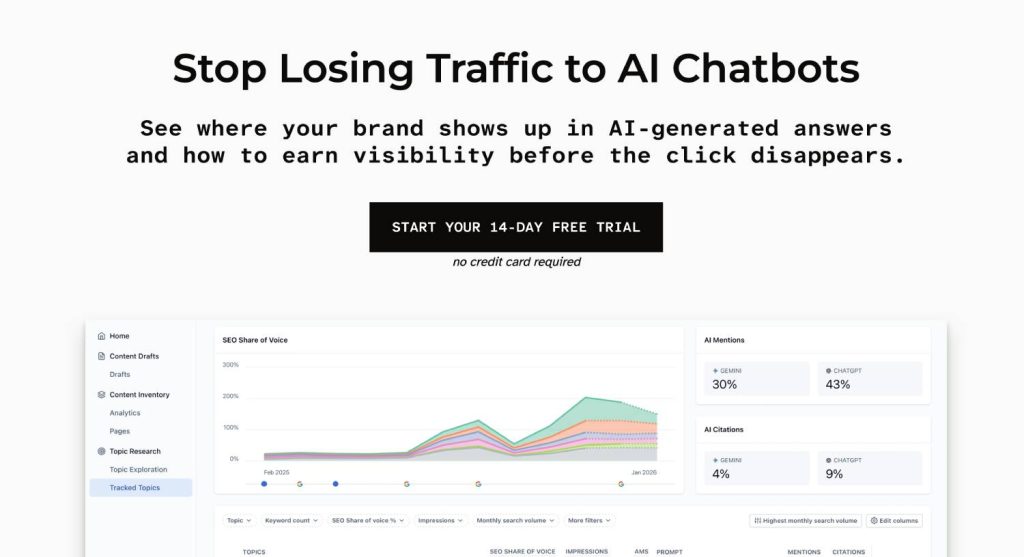
Why it matters in 2026: Writing something Clearscope grades as comprehensive is a reasonable proxy for writing something AI systems will trust enough to cite. That is the most important claim in this entry, and it belongs at the top.
The signal for content quality has shifted from keyword density to topical completeness: “do you cover what authoritative content on this topic covers?” Clearscope’s NLP-driven grading system is built around exactly that question. It is less a writing tool than a structural audit: here is what a comprehensive treatment of this topic looks like, and here is how far your draft falls short.
Pros
- NLP-driven content grading correlates strongly with topical authority signals
- Forces writers to cover subtopics they would otherwise miss entirely
- Clean interface keeps the workflow focused on content improvement
- Reports double as AI discoverability audits for published pages
- Integrates directly into Google Docs and WordPress editing workflows
Cons
- High starting price relative to the single job it performs
- Optimizing for a perfect score can flatten editorial voice
- No content generation or drafting features of any kind
- Limited value for teams not running SEO as primary channel
- Does not track whether optimized content actually gets cited by AI
Where it fits in the stack: Pre-publication. Used at the brief stage or against a first draft to ensure the content is structured for AI discoverability, not just human readability.
What to watch out for: A perfect Clearscope score can produce content that covers every required topic and says nothing interesting. It optimizes for completeness, not differentiation. Combine it with editorial judgment rather than letting it replace that judgment.
Verdict
Clearscope earns its price when SEO is your primary growth lever. The content reports are the closest proxy available for what AI systems consider comprehensive coverage of a topic. But it is a scoring tool, not a writing tool. Teams that use it to set the floor for content quality and then add editorial differentiation on top get the most from it. Teams that chase the score alone produce content that covers everything and says nothing.
3. Surfer SEO
Best for: Teams that want data-driven content briefs and on-page optimization grounded in how top-performing pages are actually structured
Why it matters in 2026: Surfer approaches the same problem as Clearscope from a different angle. Where Clearscope focuses on topical coverage, Surfer focuses on structural patterns: heading distribution, content length, NLP term frequency, and how those variables correlate with what is ranking.
Its Content Score is imperfect, but it has a real correlation with pages that perform. For teams building briefs at scale, the brief generator alone justifies the subscription.
Pros
- Real-time Content Score gives immediate structural feedback while drafting
- Brief generator alone justifies the subscription for high-volume teams
- Tightest research-to-draft integration of any optimization tool available
- Investing in answer engine optimization as a distinct product direction
- More accessible price point than Clearscope for lean operations
Cons
- Content Score incentivizes keyword stuffing if used without editorial judgment
- AI writing module is serviceable but not competitive with frontier models
- Structural recommendations can make content feel formulaic across articles
- Less depth on topical completeness compared to Clearscope’s NLP analysis
- SERP analysis relies heavily on correlation, not necessarily causation
Where it fits in the stack: Brief creation and on-page optimization. Complements Clearscope rather than replacing it. Use Surfer to structure, Clearscope to pressure-test coverage.
What to watch out for: Surfer rewards keyword and term addition. The instinct to max the Content Score can make content feel mechanical. Use the floor it sets, not the ceiling.
Verdict
Surfer is the right tool for teams where one or two people own the full content cycle from keyword to published page. The consolidated workflow eliminates context-switching that kills productivity. Pair it with Clearscope for the strongest coverage, or use it standalone if budget forces a choice. Just resist the instinct to max every Content Score, the floor it sets is valuable, the ceiling it implies is misleading.
CREATE: Tools That Move You From Blank Page to Usable Draft
4. ChatGPT
Best for: Rapid ideation, research synthesis, first-draft generation, and custom workflow automation
Why it matters in 2026: ChatGPT is not primarily a writing tool anymore. With browsing, code execution, memory, and custom GPT capabilities, it functions as a content operations platform for teams willing to build around it.
The real advantage is not in the quality of any single output. It is in the speed of the ideation-to-structure-to-draft pipeline. Teams running repeatable prompt chains through ChatGPT are producing briefs, outlines, and first drafts in minutes. The ceiling is how well you have engineered the workflow, not what the model can do.
Pros
- Generation quality at the top tier competes with any tool listed
- Custom GPTs allow reusable brand voice and workflow configurations
- Memory and deep research mode handle context-heavy projects well
- Massive plugin and integration ecosystem extends capability continuously
- Lowest barrier to entry of any serious content AI tool
Cons
- Zero native brand governance across teams using it simultaneously
- Outputs default to generic without disciplined prompt engineering invested
- Five people using five different prompts will produce five voices
- No built-in SEO optimization, scoring, or content performance tracking
- Confidently fabricates details when source material is ambiguous or absent
Where it fits in the stack: Top-of-funnel creation. Research synthesis. Repurposing long-form content into structured outlines for other formats.
What to watch out for: Without tight prompt engineering and real editorial review, ChatGPT outputs tend toward the generic. It is either strong at structure, or It is weak. Use it to build the skeleton, not the soul.
Verdict
ChatGPT is the most capable blank canvas in the category. The ceiling is genuinely world-class. The floor is generic content that sounds like everyone else’s generic content. The difference is entirely in how your team builds around it, like, prompt libraries, review processes, and output standards. It is a tool that rewards operational discipline and punishes the absence of it in roughly equal measure.
Want your brand to be the answer when buyers ask ChatGPT what to buy? DerivateX helps B2B SaaS brands engineer ChatGPT citations that drive demos and revenue.
5. Jasper
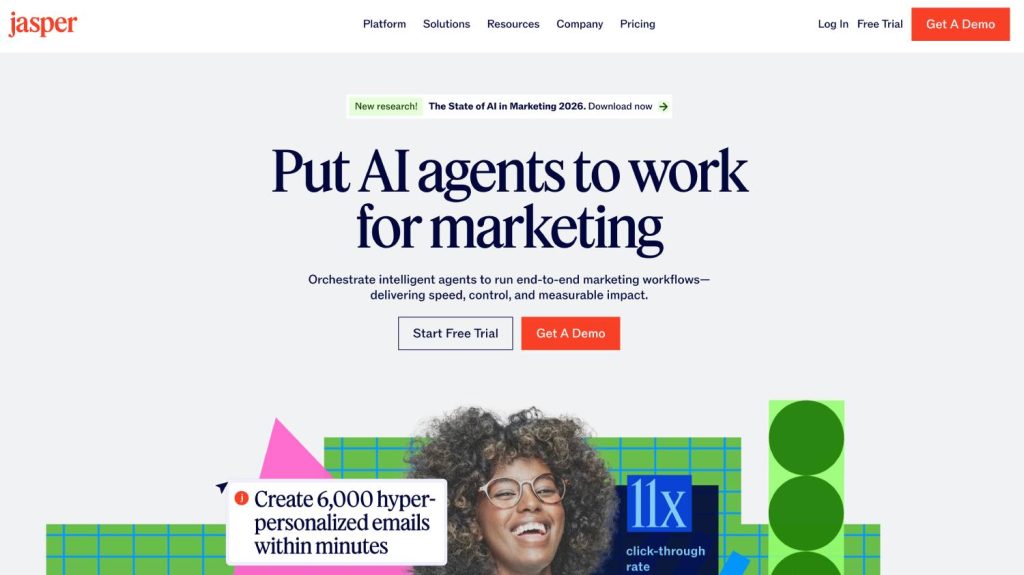
Best for: High-volume content teams that need brand voice applied consistently across many contributors and campaigns
Why it matters in 2026: Jasper is no longer competing on generation quality. It cannot win that fight. Every major model can write a serviceable blog post now. What Jasper has built instead is a brand voice layer: upload your style guides, tone references, and past content, and Jasper applies that voice consistently across your team’s output.
For a 20-person marketing org where six people are creating content and none of them sound alike, that consistency layer solves a real problem that prompt engineering alone cannot fix.
Pros
- Brand voice training solves the multi-contributor consistency problem directly
- Template library accelerates production for repeatable content formats
- Knowledge base integration gives outputs real company-specific context
- Campaign-level workflows keep assets aligned across channels and formats
- Genuine enterprise features for teams managing content at organizational scale
Cons
- Generation quality trails frontier models on raw output comparisons
- Expensive at scale and pricing compounds quickly with team growth
- Brand voice setup requires meaningful time investment before producing returns
- Teams expecting instant results without onboarding are consistently disappointed
- Competes poorly on individual quality against ChatGPT or Claude directly
Where it fits in the stack: Mid-funnel content production. Long-form articles, landing pages, email sequences. Most valuable for teams with multiple contributors who need output to feel like it came from one voice.
What to watch out for: Jasper is expensive at scale, and the brand voice features require real investment to set up. Teams expecting immediate returns without proper onboarding tend to be disappointed. Treat it like hiring a contractor: you have to train it before it performs.
If your team has outgrown Jasper or is evaluating whether it’s the right fit, see our full breakdown of the Best Jasper alternatives for content marketers.
Verdict
Jasper’s value proposition has shifted completely. It is no longer a writing quality play. It is a brand consistency play. For a 20-person marketing org where six contributors need to sound like one voice, that solves a real problem nothing else on this list addresses as directly. For a solo operator or a two-person team, the overhead is not justified. Know which problem you are solving before committing.
6. Notion AI
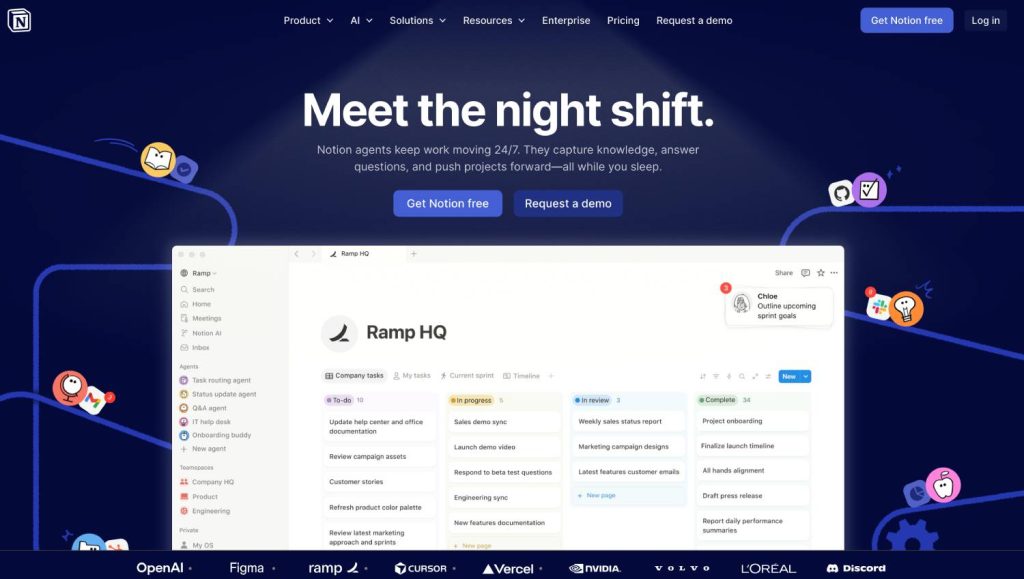
Best for: Teams whose content workflow already lives in Notion and want generation capabilities without switching context
Why it matters in 2026: Notion AI’s context is the bottleneck in AI content generation. Every other tool requires you to import context: paste in the brief, describe the audience, explain the angle. Notion AI has ambient context by default.
It operates inside the workspace where your briefs, research docs, and editorial calendar already live. That structural advantage is underappreciated until you have spent six months copying and pasting context into tools that live outside your workflow.
Pros
- Operates inside the workspace where briefs and calendars already live
- Ambient context eliminates the copy-paste overhead every other tool requires
- Frictionless adoption for teams already running editorial operations in Notion
- Summarization and outline generation are genuinely useful for planning workflows
- Low per-member pricing makes it an easy incremental addition to existing plans
Cons
- Output quality noticeably trails ChatGPT, Claude, and frontier-tier models
- Struggles with nuanced, voice-driven writing that distinguishes strong content
- Not a reason to switch to Notion if your team operates elsewhere
- Limited control over model behavior compared to dedicated AI writing tools
- No SEO optimization, content scoring, or discoverability features built in
Where it fits in the stack: Content planning, brief writing, internal knowledge management, and first-draft assistance embedded directly in the editorial workflow.
What to watch out for: The output quality is solid, not exceptional. If you are not already a Notion-first team, this is not a reason to become one. But if you are, the friction reduction is real.
Verdict
Notion AI is a workflow argument, not a model quality argument. If your editorial operation already lives in Notion, the friction reduction is real and immediate. If it does not, this is not a reason to migrate. Use it for planning, briefs, and internal drafts where context matters more than polish. Route anything client-facing or publication-ready through a stronger model.
7. Copy.ai
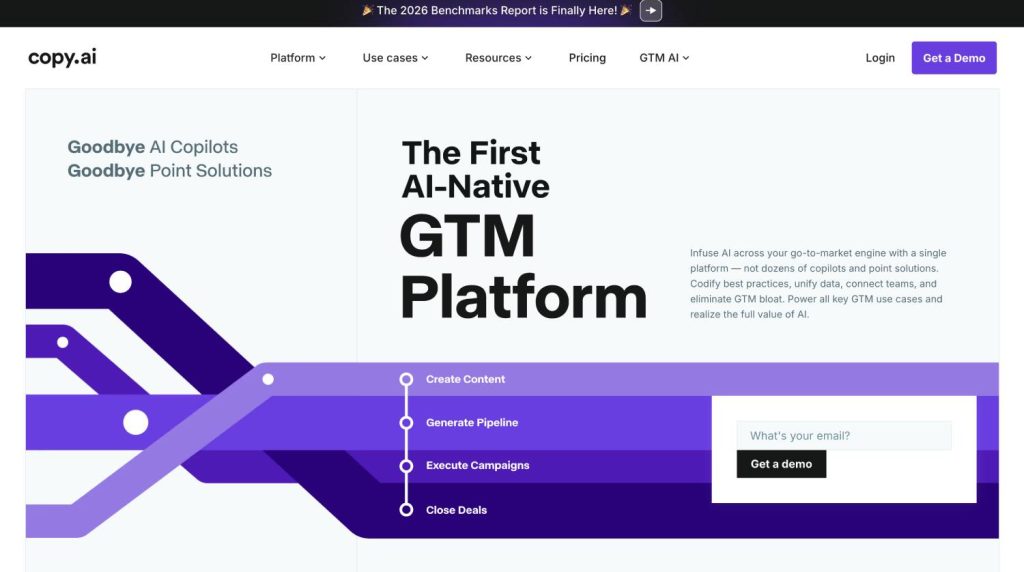
Best for: GTM teams that need repeatable, scalable content pipelines, not just one-off drafts.
Why it matters in 2026: Copy.ai has moved away from competing on prose quality. Its Workflows feature is the actual product: connect a data source, define a template, generate at volume. Copy.ai is not a writing tool with automation features. It is an automation platform that happens to generate text.
For teams running localization at scale, building hundreds of product description variants, or systematizing sales enablement content across verticals, the workflow engine delivers something no single-generation tool can: structured repeatability without manual overhead.
Pros
- Workflow automation engine is genuinely distinct from every other tool listed
- CRM integrations connect content production directly to pipeline and outreach
- Scales templated content production without proportional headcount increase
- GTM-focused positioning aligns well with revenue-driven content operations
- Free tier is functional enough to validate the workflow approach before committing
Cons
- Long-form editorial quality is not competitive with dedicated writing tools
- Workflow builder has a real learning curve requiring a systems-minded operator
- Teams without someone to design and maintain automations will underutilize it
- Not built for thought leadership, nuance, or high-editorial-standard content
- Output quality varies significantly depending on template and input design
Where it fits in the stack: Systematic content production where structure matters more than nuance. Email sequences, ad variations, product descriptions, templated content at scale.
What to watch out for: If you need sophisticated long-form output, Copy.ai is the wrong tool. Its power is entirely in the workflow engine. Go in with that expectation and it delivers. Go in expecting competitive generation quality and you will leave.
Verdict
Copy.ai is not a writing tool with automation bolted on. It is an automation platform that happens to generate text. That distinction is the entire point. For growth teams where content feeds sales sequences, product descriptions, and outreach at scale, the workflow engine delivers something no generation tool can. For editorial teams producing long-form content that requires voice and depth, it is the wrong purchase.
8. Claude
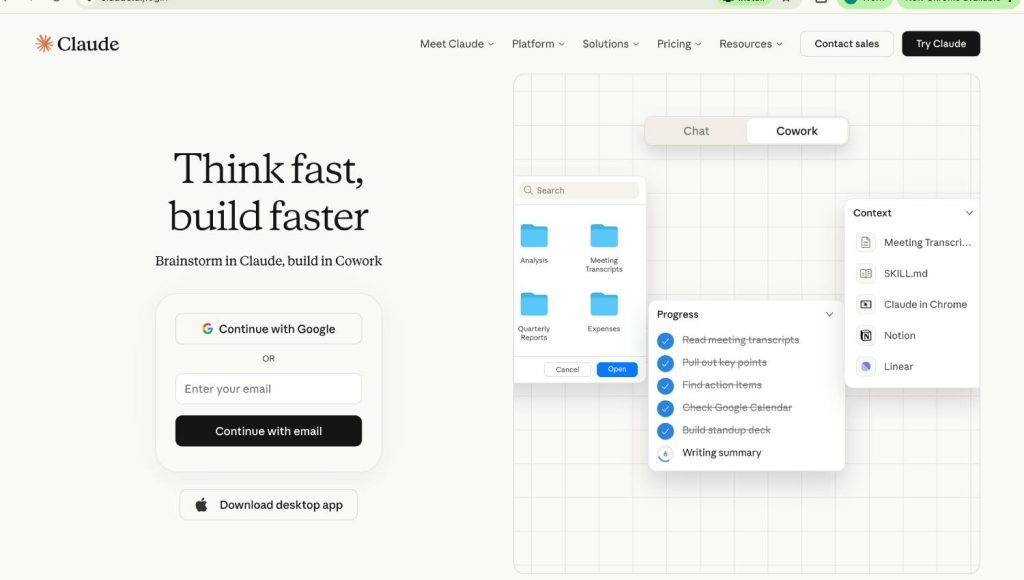
Best for: Complex reasoning tasks, long-document analysis, and content where accuracy and nuance carry real stakes
Why it matters in 2026: Claude occupies a distinct position in the content AI landscape. Its comparative strength is in depth: the ability to hold complex instructions over long documents, synthesize dense source material without losing the thread, and produce writing that stays accurate under factual pressure.
For research-heavy content, competitive analyses, thought leadership pieces, and anything where a factual error damages credibility, that reliability differential matters. It is not the fastest tool. Claude is the one that is less likely to confidently fabricate a statistic.
Pros
- Strongest reasoning and factual reliability of any model in this list
- Extended context window handles full brand guides and research documents simultaneously
- Long-form output maintains coherence over thousands of words consistently
- Projects mode preserves context across sessions reducing repetitive setup work
- Less likely to confidently fabricate statistics or misattribute claims
Cons
- Slower than tools optimized purely for high-frequency volume production
- No native brand governance, SEO tooling, or team collaboration layer
- Not a content operations system and does not pretend to be one
- API integration required to embed in automated content workflows
- Overkill for low-complexity, high-frequency content like social posts or ads
Where it fits in the stack: High-value content where accuracy and editorial judgment matter more than raw speed. Research synthesis, long-form thought leadership, and use cases where the brand’s credibility is on the line.
What to watch out for: Claude is slower than tools optimized for volume. For high-frequency, low-complexity production, faster options exist. Use it where quality failure has real consequences.
Verdict
Claude occupies a specific and defensible position: the tool you reach for when accuracy and depth carry real stakes. Research-heavy content, competitive analyses, thought leadership that has to hold up under scrutiny, this is where the quality differential shows. It is not the fastest tool and it is not trying to be. Use it where a factual error damages credibility and where the difference between good and genuinely sharp matters to the audience reading it.
REFINE: Tools That Make Content Consistent, Accurate, and Ready
9. Writer

Best for: Enterprise content teams that need brand consistency enforced at the system level, not just described in a style guide
Why it matters in 2026: Every content team has a style guide. Almost no content team actually follows it at scale. Writer solves this by moving brand consistency from a document people reference to a system that enforces.
Its combination of style guide rules, terminology management, grammar checking, and LLM-powered writing assistance means that brand drift, the slow divergence of voice across contributors and time, becomes a technical problem with a technical solution. For regulated industries like fintech, healthcare, and legal, the compliance-aware writing features address a problem that no other tool in this category takes seriously.
Pros
- Knowledge Graph trains on your actual brand language and terminology
- Moves brand consistency from a style guide document to system-level enforcement
- Compliance-aware writing features address regulated industry requirements directly
- Terminology management prevents brand drift across contributors and time
- Deepest governance infrastructure of any tool in this category
Cons
- Enterprise pricing and implementation requirements exclude smaller teams entirely
- Configuration demands meaningful organizational commitment before delivering value
- Not a tool you spin up in an afternoon for quick content needs
- Teams under fifteen people will find the infrastructure disproportionate
- Returns are real but delayed and require patience through the setup phase
Where it fits in the stack: Quality control layer. Sits above individual creation tools as the mechanism that keeps output from drifting across contributors, channels, and months.
What to watch out for: Writer requires real organizational commitment to configure properly. The returns are real but delayed. Teams that treat it as a passive plugin rather than an active editorial infrastructure investment will underuse it.
Verdict
Writer is the serious answer for companies where brand consistency is a competitive variable, not a style preference. Regulated industries, enterprise B2B, and distributed content teams with fifteen or more contributors are the sweet spot. The implementation overhead is real. The payoff is content that sounds like your company regardless of who wrote it, enforced at the system level rather than by hoping people read the style guide.
10. Grammarly
Best for: Distributed teams that need a quality and tone check that travels with the writer across every surface where writing happens
Why it matters in 2026: The case for Grammarly in 2026 is not what it does. Everyone knows what it does. The case is where it does it. Grammarly works across email, Google Docs, CMS platforms, Slack, and social tools.
That ubiquity means the quality check is always present, not locked inside one tool. For distributed teams where content gets written and published across a dozen surfaces by a dozen people, the portability of the enforcement layer matters as much as its quality. It is not the most sophisticated tool on this list. It is the one most likely to actually be in use at the moment a mistake gets made.
Pros
- Works across every browser-based writing surface your team already uses
- Brand style guide feature enforces tone and terminology standards passively
- Highest adoption rate of any governance tool simply because it is everywhere
- Low per-member cost makes it viable as a baseline for any team size
- Catches errors at the exact moment they are being made, not after
Cons
- AI writing features exist but are not the reason to purchase it
- Heavy reliance without editorial judgment flattens personality out of writing
- Not a drafting tool and will disappoint teams expecting Jasper-level generation
- Suggestions optimize for clarity and correctness, not distinctiveness or voice
- Limited control over nuanced brand voice beyond basic tone parameters
Where it fits in the stack: Last-mile quality and tone consistency. Not a creation tool. A finalization layer for everything before it is published.
What to watch out for: Heavy use without editorial judgment can sand the personality out of writing. Grammarly’s suggestions optimize for clarity and correctness. Use it to catch errors, not to define voice.
Verdict
Grammarly is not the most sophisticated tool on this list. It is the most likely to be in use at the moment a mistake actually gets made. That portability across every writing surface is the real value proposition. Buy it for governance coverage across the forty-three places your team actually writes things. Do not buy it expecting competitive AI generation. It is the cheapest form of brand consistency insurance available, and for that job, nothing else comes close.
DISTRIBUTE: Tools That Extend Content Reach Across Formats and Surfaces
11. HubSpot Content Hub / Breeze

Best for: Marketing teams that want AI-assisted content creation, optimization, and distribution inside their existing CRM and marketing automation stack
Why it matters in 2026: HubSpot is the only incumbent marketing platform that has tried to wire AI into every stage of the content operation, not just the writing layer. Breeze AI touches blog drafts, content remix, SEO recommendations, and social publishing.
The integration value is the actual argument: if your content operation, your CRM, and your email automation already live inside HubSpot, connecting AI generation to contact data for personalization at scale is something no standalone tool can replicate. That is the specific bet HubSpot is making, and for teams already on the platform, it is a serious one.
Pros
- Only platform connecting AI content creation directly to revenue attribution data
- Planning, production, publishing, and performance measurement live in one system
- Content remix feature repurposes assets across formats without separate tools
- CRM integration enables personalization at scale using actual contact data
- Eliminates vendor coordination overhead for teams already on HubSpot fully
Cons
- Every individual AI feature loses a head-to-head against dedicated tools
- Value is tightly coupled to existing HubSpot ecosystem investment
- Teams not on HubSpot CRM have limited reason to choose this
- Breadth-over-depth approach means no single capability is best-in-class
- Content Hub pricing tiers gate meaningful features behind higher plans
Where it fits in the stack: Full-lifecycle content platform for teams that want consolidation over best-in-class. The integration advantage only exists inside the HubSpot ecosystem.
What to watch out for: HubSpot is solving for breadth, not depth. Each individual AI feature will lose a head-to-head comparison against a dedicated tool. The value is workflow consolidation, not output quality. Know which problem you are solving before you commit.
Verdict
HubSpot Content Hub with Breeze is not the best AI writer. It is the best AI writer integrated with the system you already use to measure whether marketing works. For HubSpot-native teams, the ability to trace content directly to a pipeline inside one dashboard is something no standalone tool replicates. For everyone else, it is a consolidation play that trades peak performance for operational convenience.
12. Canva
Best for: Teams that need to repurpose written content into visual formats quickly, without a dedicated design team
Why it matters in 2026: A well-written article that never becomes a LinkedIn carousel, a branded email header, or a short-form video cover is leaving a distribution surface on the table. Canva’s Magic Studio brings AI-assisted design, image generation, and presentation creation to teams that do not have designers.
Its brand kit features mean that visuals stay consistent even when non-designers are building them, which is how most B2B content teams actually operate. The question for most content operations is not whether to use Canva. It is whether they are using it systematically or just occasionally.
Pros
- Magic Studio brings AI-assisted design to teams without dedicated designers
- Brand kit enforcement keeps visuals consistent even when non-designers build them
- Turns written content into social, email, and presentation formats in minutes
- Template library covers virtually every visual format a content team needs
- Free tier is genuinely usable for individuals and early-stage teams
Cons
- Default templates produce content that looks obviously template-generated
- Not a design strategy tool and cannot replace intentional creative direction
- AI image generation is functional but not competitive with dedicated platforms
- Teams that live on defaults will produce work indistinguishable from competitors
- Limited advanced design capabilities compared to professional creative tools
Where it fits in the stack: Visual distribution layer. Converts written content into the formats required by social, email, and paid channels.
What to watch out for: Canva is a design shortcut, not a design strategy. Teams that live on default templates produce content that looks obviously template-generated. Invest time in building distinctive branded templates. The tool rewards that investment.
Verdict
Canva is the visual distribution layer most content teams are underusing. The question is not whether to have it. It is whether your team uses it systematically or just occasionally. Invest time building distinctive branded templates and the output quality jumps substantially. The tool rewards that investment. Use it on defaults and the content looks like everyone else’s content, functional but forgettable.
13. Descript
Best for: Teams that produce or repurpose content in audio and video formats
Why it matters in 2026: Descript made a genuine product decision that most video tools have not: treat the transcript as the primary editing interface, not the timeline. Edit the words, and the video follows.
For content teams running founder interviews, webinars, or podcasts, Descript removes the technical barrier entirely. A content editor who can edit text can now edit video. The repurposing workflow alone, pulling clips, cleaning audio, generating captions, justifies the tool for any team producing long-form recorded content.
Pros
- Transcript-based editing lets content editors edit video without technical skills
- Repurposing workflow turns long-form recordings into short-form clips efficiently
- Filler word removal and audio cleanup are practically one-click operations
- Caption generation is fast, accurate, and essential for social distribution
- Eliminates the technical barrier between content teams and video production
Cons
- AI voice cloning and synthetic fill features require careful editorial judgment
- Not a replacement for professional video editing on high-production projects
- Learning curve exists despite being simpler than traditional editing software
- Export quality and format options trail dedicated professional editing suites
- Works best with clean source material and degrades with poor audio input
Where it fits in the stack: Audio and video production layer. Turns raw recordings into publishable content, and long-form content into short-form clips for distribution.
What to watch out for: The transcript-based editing workflow is strong. The AI voice and synthetic fill features require more judgment. Use them for minor corrections, not as a substitute for clean source material.
Verdict
Descript’s product decision to make the transcript the primary editing interface changed who can produce video. A content editor who can edit text can now edit video. For teams running founder interviews, podcasts, or webinars, the repurposing workflow alone justifies the subscription. Use it for the editing model. Exercise judgment on the synthetic features. Start with clean recordings and the output quality handles the rest.
14. Synthesia
Best for: Teams that need professional video content at scale without a camera, studio, or production budget
Why it matters in 2026: The avatar quality in Synthesia has crossed a threshold. Corporate audiences have calibrated to AI presenters in the same way they calibrated to stock photography: it is recognizable as a format, and that is fine, because the alternative is no video at all.
For B2B teams producing onboarding content, product walkthroughs, compliance training, or localized video across multiple markets, Synthesia delivers a cost-per-video ratio that traditional production cannot approach. A 10-person marketing team can produce 40 videos a quarter. Without Synthesia, that number is closer to four.
Pros
- AI avatar quality has crossed the threshold of corporate audience acceptance
- Cost-per-video ratio makes scaled video production viable for small teams
- Localization across multiple languages and markets without reshooting anything
- Product walkthroughs, onboarding, and compliance training are natural use cases
- No camera, studio, or production budget required to produce professional output
Cons
- AI avatars cannot replace human-led video where trust and connection matter
- Output is recognizable as AI-generated and carries that format perception
- Limited creative flexibility compared to traditional video production approaches
- Not suitable for thought leadership or personality-driven brand content
- Script quality determines output quality with no room for improvisation
Where it fits in the stack: Video production at scale. Particularly valuable for international teams, product education, and any use case where video is required but production resources are limited.
What to watch out for: AI avatars are not a replacement for human-led video where trust and personal connection are the point. Use Synthesia for content where clarity and professionalism matter. Use real people for content where authenticity does.
Verdict
Synthesia solves a binary problem: you either produce video at scale or you do not. For B2B teams where the alternative is four videos a quarter instead of forty, the math is straightforward. Use it for content where clarity and professionalism matter. Use real people for content where authenticity does. The format is recognized and accepted in the same way stock photography was, functional, professional, and appropriate when production resources do not exist.
MEASURE: Tools That Tell You Whether You Are Actually Being Found
15. Semrush / AI Visibility Tooling
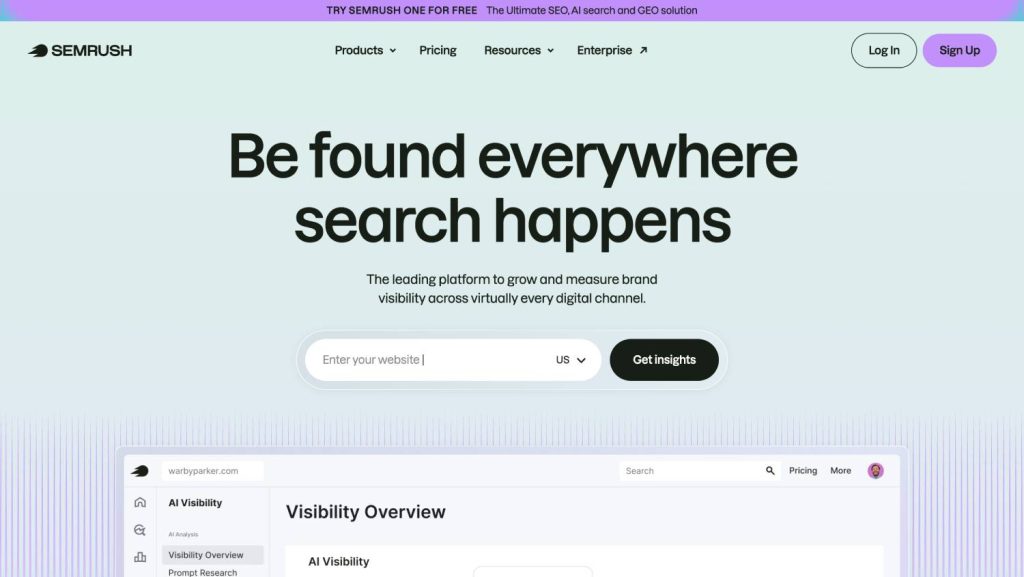
Best for: Teams that want to track not just search rankings but actual brand presence inside AI-generated answers and discovery surfaces.
Why it matters in 2026: You cannot optimize for AI visibility if you cannot measure it. That sentence is obvious, and yet almost no content team has any reliable data on whether their brand appears in ChatGPT responses, Perplexity summaries, or Google AI Overviews for their core category questions.
Semrush’s investment in AI visibility tracking, covering brand mentions inside AI-generated results across multiple platforms, addresses that gap more seriously than any other mainstream analytics platform. The data is imperfect. The methodology is still maturing. Track it now anyway, before you have two years of invisible competitive erosion to explain.
Pros
- Most developed AI visibility tracking inside a mainstream SEO analytics platform
- Covers brand mentions across AI-generated results on multiple platforms
- Existing Semrush users gain AI measurement without adding another vendor
- Traditional SEO data and AI visibility data sit in one reporting environment
- Investment in the category signals long-term commitment to AI search tracking
Cons
- AI visibility methodology is still maturing and data is directional, not definitive
- Category benchmarks barely exist making comparative analysis difficult currently
- AI tracking is one feature among hundreds rather than a dedicated focus
- Depth of AI citation analysis trails purpose-built tools like Otterly or Profound
- Pricing reflects the full SEO suite even if AI tracking is primary need
Where it fits in the stack: Measurement and reporting layer. Closes the loop between content investment and AI-surface presence. Makes the case for content marketing in a world where session counts and page views are no longer the right proxies for reach.
What to watch out for: This category is nascent. Treat the numbers as directional, not definitive. The benchmarks barely exist. The value right now is in building a baseline, understanding the trend, and having data to act on when the measurement fidelity improves. Start tracking now.
Verdict
Semrush earns its place here because it is the first mainstream analytics platform to treat AI visibility as a real measurement problem. The data is imperfect. Track it now anyway. Two years from now, the teams that built a baseline today will have trend data to act on. The teams that waited will have two years of invisible competitive erosion to explain to their board with no data to diagnose what happened.
16. Otterly.ai
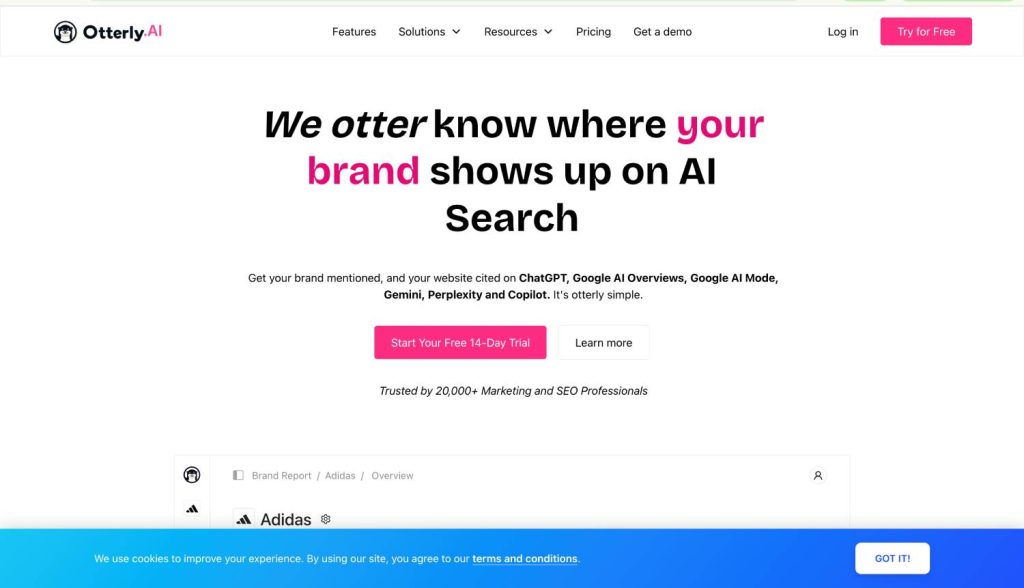
Best for: Content and SEO teams that need a dedicated dashboard for tracking brand visibility across AI search platforms without enterprise pricing
Why it matters in 2026: Semrush added AI visibility to an existing SEO suite. Otterly.ai was built from the ground up to do one thing: show you whether your brand appears in AI-generated answers and how that presence changes over time.
The platform monitors six AI search surfaces, ChatGPT, Google AI Overviews, Google AI Mode, Perplexity, Gemini, and Microsoft Copilot, and reports Share of AI Voice against competitors for every tracked prompt.
The GEO audit tool evaluates 25+ on-page factors affecting citation likelihood, which turns visibility data into a prioritized list of things to actually fix. For agencies managing multiple brands, the workspace model keeps client dashboards separate without per-client fees.
The value is in the operational loop: define the prompts your buyers use, monitor which brands get cited, identify the gaps, and adjust content accordingly. That loop barely existed twelve months ago. Otterly.ai is one of the tools making it practical.
Pros
- Monitors six AI search surfaces from a single dedicated dashboard
- GEO audit evaluates 25+ on-page factors affecting AI citation likelihood
- Share of AI Voice metric quantifies competitive positioning across prompts
- Agency workspace model manages multiple brands without per-client fees
- Accessible starting price makes AI visibility tracking viable for smaller teams
Cons
- No traffic or revenue attribution connecting citations to business outcomes
- Weekly data refresh cadence can feel slow for fast-moving competitive categories
- Does not generate content or provide optimization recommendations beyond the audit
- Claude is currently missing from the list of monitored AI platforms
- Depth of citation analysis is lighter than enterprise tools like Profound
Where it fits in the stack: AI visibility monitoring layer. Complements Semrush rather than replacing it. Use Semrush for traditional search analytics, Otterly.ai for dedicated AI citation tracking across platforms.
What to watch out for: No traffic attribution. It tells you whether you are being cited, not whether those citations drove sessions or pipeline. Teams that need the full measurement chain from citation to revenue will need to connect it with their analytics stack manually.
Verdict
Otterly.ai is the most practical entry point for teams that know they need to track AI visibility but are not ready for enterprise pricing. The operational loop enables, defines prompts, monitors citations, identifies gaps, and adjusts content which is the foundation of any serious AI discoverability program. Start here. Graduate to Profound when your program justifies the investment. The worst decision is not choosing the wrong tool. It is measuring nothing.
17. Peec AI
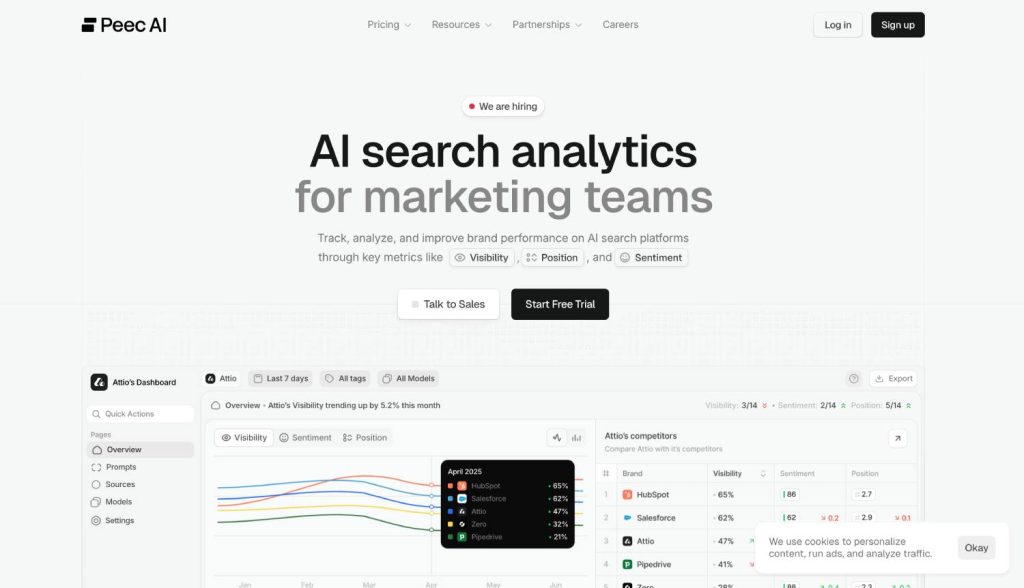
Best for: Marketing teams that need to understand not just whether AI mentions their brand, but how AI talks about their brand
Why it matters in 2026: Most AI visibility tools count mentions. Peec AI evaluates the quality and sentiment of those mentions, whether your brand is positioned as a market leader, a budget alternative, or something a user should avoid.
That distinction matters enormously. Being cited alongside premium competitors signals a different market position than being cited alongside discount options, and Peec AI quantifies the difference.
The platform runs tracked prompts daily across ChatGPT, Perplexity, Google AI Overviews, and additional engines available as add-ons. Citation tracking distinguishes between content that was “used” to inform an answer and content that was explicitly “cited” with a link, which is a nuance most tools miss entirely. The source-level analysis shows which third-party domains are being referenced most often in your category, which turns citation monitoring into a digital PR target list.
Pros
- Sentiment analysis reveals how AI positions your brand, not just mentions
- Distinguishes between content “used” and content explicitly “cited” with links
- Source-level analysis turns citation data into a digital PR target list
- Daily prompt execution provides reliable trend data across tracked queries
- Clean interface keeps the focus on actionable visibility insights
Cons
- Monitoring platform only with no content creation or optimization capabilities
- Base coverage requires paid add-ons for Gemini, Claude, and additional engines
- No traffic attribution connecting AI mentions to sessions or pipeline
- Pricing starts at €89/month for just 25 prompts which scales quickly
- Action layer must be built through your existing content and SEO stack
Where it fits in the stack: Brand intelligence layer for AI search. Sits alongside visibility tracking tools and adds the sentiment and positioning dimension that raw citation counts cannot provide.
What to watch out for: Peec AI is a monitoring platform, not an optimization platform. It surfaces what is happening. It does not generate the content or build the authority signals needed to change what is happening. Teams that need an action layer will use Peec AI for insight and route the work through their content and SEO stack.
Verdict
Peec AI answers a question the other measurement tools do not: is AI positioning your brand as a leader or a budget alternative? That distinction matters enormously. Being cited is one thing. Being cited alongside premium competitors in a favorable framing is something else entirely. Use it for brand intelligence. Route the optimization work through your content stack. The insight it surfaces is worth the subscription. The action it requires is on you.
18. Profound
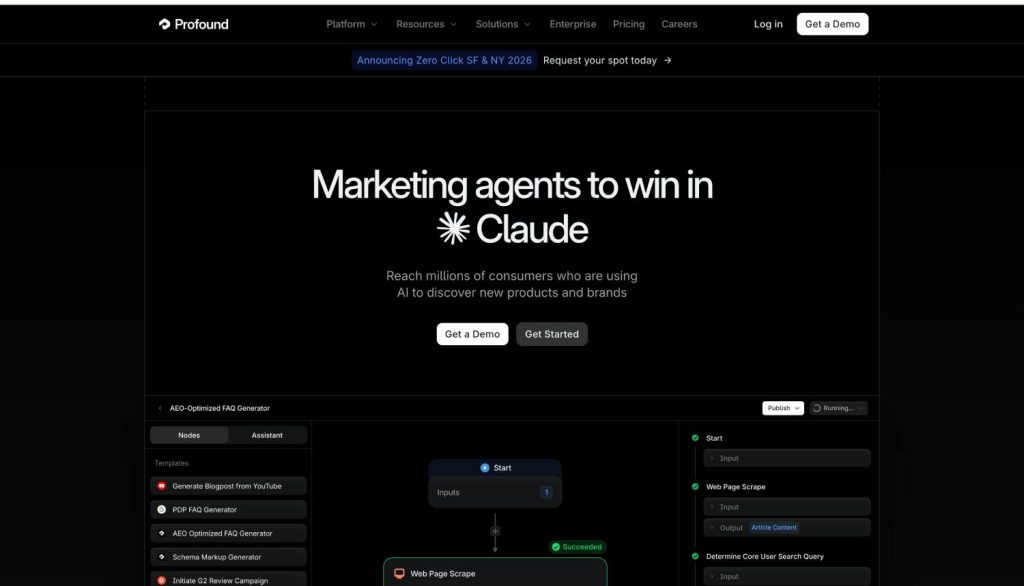
Best for: Enterprise brands that want AI visibility analytics connected to revenue attribution and competitive intelligence at scale
Why it matters in 2026: Profound is the deepest platform in this category. Where other tools track whether your brand appears in AI answers, Profound connects that visibility to traffic, conversion, and revenue through its Agent Analytics integration, the measurement chain most tools leave incomplete.
The platform’s Prompt Volumes feature estimates actual search volume across AI conversations, drawing from panels of millions of real AI assistant users. This is data that does not exist anywhere else in the category.
It answers a question no traditional keyword tool can: “how many people are asking ChatGPT about my category, and what exactly are they asking?” For brands running serious AI visibility programs, that demand signal is the planning layer everything else depends on.
Profound also offers automated content workflows and AI-optimized brief generation, closing the gap between insight and action that plagues pure monitoring tools. SOC 2 Type II compliance and SSO make it viable for enterprise security requirements that rule out lighter tools.
Pros
- Only platform connecting AI visibility to traffic, conversion, and revenue attribution
- Prompt Volumes estimates actual AI search demand from millions of real users
- Agent Analytics shows which AI crawlers visit your site and what they analyze
- Automated content workflows close the gap between insight and execution
- SOC 2 Type II compliance and SSO meet enterprise security requirements
Cons
- Full platform starts at $399/month per workspace which excludes smaller teams
- Feature depth requires a team with organizational maturity to fully utilize
- Complexity demands a dedicated operator rather than occasional casual use
- A two-person content operation will pay for capabilities it cannot absorb
- Newer platform with less market tenure than established SEO analytics tools
Where it fits in the stack: Enterprise AI visibility command center. Replaces the need for separate monitoring, analytics, and content tools for teams with budget and organizational maturity to use the full platform.
What to watch out for: Pricing reflects the enterprise positioning. The full platform starts at $399/month per workspace, and the depth of features requires a team that will actually use them. A two-person content operation will pay for capabilities it cannot absorb. Start with a lighter tool and graduate to Profound when the program justifies it.
Verdict
Profound is the deepest platform in this category, and it is not close. The Prompt Volumes feature, estimating what millions of real users are actually asking AI tools, is data that does not exist anywhere else. The revenue attribution chain from citation to conversion is the measurement layer every serious AI visibility program eventually needs. Start with a lighter tool. Graduate to Profound when your program, your budget, and your team can absorb what it offers. It is built for the stage after you have proven AI visibility matters to your business.
The 18 Tools, Compared
| Tool | Category | Best For | Starting Price | Free Tier |
|---|---|---|---|---|
| Ahrefs | Plan | Competitive authority mapping, topical gap analysis | ~$129/mo | No |
| Clearscope | Plan | Topical completeness scoring for AI discoverability | ~$170/mo | No |
| Surfer SEO | Plan | Data-driven content briefs and on-page optimization | ~$89/mo | No |
| ChatGPT | Create | Rapid ideation, research synthesis, first-draft generation | $20/mo (Plus) | Yes |
| Jasper | Create | Brand voice consistency across high-volume teams | $39/mo (Creator) | No |
| Notion AI | Create | Workflow-embedded drafting for Notion-native teams | $10/member/mo add-on | No |
| Copy.ai | Create | Automated content pipelines for GTM teams | $36/mo | Yes |
| Claude | Create | Long-form accuracy, research synthesis, complex reasoning | $20/mo (Pro) | Yes |
| Writer | Refine | Enterprise brand voice enforcement at system level | $18/user/mo | No |
| Grammarly | Refine | Portable quality and tone check across every writing surface | $15/member/mo | Yes |
| HubSpot Breeze | Distribute | AI content inside CRM and marketing automation stack | $20/mo (Starter) | Yes |
| Canva | Distribute | Visual repurposing for teams without designers | $13/mo (Pro) | Yes |
| Descript | Distribute | Transcript-based audio and video editing | $24/mo | Yes |
| Synthesia | Distribute | AI avatar video at scale without production budget | $22/mo | No |
| Semrush | Measure | AI visibility tracking inside a full SEO analytics suite | ~$130/mo | No |
| Otterly.ai | Measure | Dedicated AI citation monitoring across 6 platforms | $29/mo | 14-day trial |
| Peec AI | Measure | Brand sentiment and citation quality analysis in AI answers | ~$97/mo (€89) | No |
| Profound | Measure | Enterprise AI visibility with revenue attribution | $399/mo (workspace) | No |
The Advantage Is Not the Tool. It Is the Stack.
None of these tools, used in isolation, changes your content marketing trajectory.
ChatGPT without a quality layer produces generic content fast. Clearscope without a distribution strategy produces optimized content no one sees. AI visibility measurement without the content to back it up produces data about a problem you have not yet solved.
The teams pulling ahead in 2026 are not the ones with the best single tool. They are the ones who have built a stack where the output of each layer feeds the next: research and planning that drives creation, creation that flows through a refinement system, refined content that gets distributed into every format the audience uses, and measurement that tracks whether any of it is actually building brand presence in the places that now decide what gets found.
Most teams have the first layer. Some have the second. Almost no one has a real plan for the fifth.
That is where the advantage is being built right now. The brands that know whether they are being cited by AI systems, and can adjust their content architecture accordingly, will compound authority in ways that teams focused only on publishing volume cannot replicate. Publishing frequency is a commodity. Structural presence in AI-generated answers is not.
The content marketing question in 2026 is not “are you using AI?” Everyone is.
The question is “do you know if it is working?”
Most teams do not. That is the gap. Close it.
P.S. If you want to measure whether your site and content is actually being cited by AI systems, the AI Visibility Score framework breaks down how to track it.
FAQ
1. What is the best AI tool for content marketing in 2026?
There’s no single best tool; it depends on your job-to-be-done. For planning, Ahrefs and Clearscope lead. For creation at scale, ChatGPT and Jasper are top picks.
For refinement and brand consistency, Writer is the enterprise standard. For measuring AI visibility, Semrush is currently the most developed option.
2. How do AI content tools affect SEO and AI search visibility?
Traditional SEO optimizes for keyword rankings in Google. AI search visibility, meaning appearing in ChatGPT, Perplexity, Claude, or Google AI Overviews, depends on topical authority, content comprehensiveness, and structured, citable writing.
Tools like Clearscope, Surfer SEO, and Semrush’s AI visibility features directly address this shift.
3. Is Claude (Anthropic) good for content marketing?
Yes, particularly for research-heavy, long-form, or high-stakes content where accuracy matters. Claude is known for strong document analysis, reliable fact-handling, and nuanced reasoning.
It’s less optimized for high-frequency, low-complexity production than tools like Jasper or Copy.ai.
4. What’s the difference between Clearscope and Surfer SEO?
Clearscope focuses on topical completeness, ensuring your content covers every subtopic an authoritative piece would address. Surfer SEO focuses on structural patterns like heading distribution, word count, and NLP term frequency compared to top-ranking pages.
Many teams use both: Surfer to structure briefs, Clearscope to pressure-test coverage.
5. How much do these AI content tools cost?
Pricing varies significantly. Grammarly and Notion AI start under $20/month. Clearscope and Surfer SEO run $50 to $200/month depending on usage. Jasper and Writer are team-priced and scale into the hundreds per month.
Ahrefs and Semrush start around $100 to $130/month for individual plans. Synthesia and Descript are usage-based with entry tiers around $20 to $30/month.
6. Can AI content tools replace human writers?
Not for high-value content. AI tools excel at structure, speed, and scale. They struggle with original insight, brand voice without training, and accuracy under factual pressure.
The winning model in 2026 is augmentation: human writers setting direction, editorial judgment, and differentiation, with AI tools handling research synthesis, first drafts, reformatting, and distribution.
7. What is AI visibility and how do I measure it?
AI visibility refers to whether your brand appears, with authority, in AI-generated answers from systems like ChatGPT, Perplexity, Google AI Overviews, or Claude. Currently, Semrush’s AI visibility tracking is the most developed mainstream tool for this.
The measurement category is nascent; treat current data as directional and start building your baseline now.
8. What is the best AI tool for video content marketing?
For teams without a production budget, Synthesia (AI avatar video at scale) and Descript (transcript-based video editing) are the two most practical options.
Synthesia excels at product education, onboarding, and localized content. Descript excels at repurposing recorded interviews, webinars, and podcasts into short-form clips.